

Upholstery Care for NYC Apartments: Fabric Codes, Spot Cleaning and When to Call a Pro

City living is tough on furniture. Dust, pollen, pet dander, spilled coffee, and the everyday wear of small apartments all end up in your sofa and chairs. Regular vacuuming helps, but it only reaches the surface. This guide explains why upholstery cleaning NYC matters, how often you should do it, what you can safely handle yourself, and when it’s time to bring in a professional.
Why Upholstered Furniture Needs Regular Cleaning
Upholstery fibers and the padding beneath them hold on to dust, body oils, and odors long after the surface looks clean. Over time that buildup dulls the color of the fabric, wears down fibers faster, and can leave a sofa smelling stale. It can also aggravate allergies for anyone who spends time on it.
Why NYC Apartments Are Hard on Upholstery
Living in New York puts extra demands on upholstered furniture. Smaller apartments mean the sofa is often the center of everything: a workspace, a dining spot, and a place to relax, all in one. Windows are opened to street air, which brings in city dust and soot, and heating and air conditioning keep fine particles moving through the room. Many households also share space with pets, which adds hair and dander to every cushion. Because furniture in compact apartments rarely rests, wear spreads quickly and unevenly. Cleaning on a regular schedule keeps that buildup from settling deep into the fibers.
How Often Should You Clean Upholstery?
Most households do well with a professional cleaning about once a year, and more often with pets, young kids, or allergies. For the full breakdown, read How Often Should Upholstery Cleaning NYC Be Done.
Check the Cleaning Code First
Most upholstered furniture has a care tag with a cleaning code. It tells you what’s safe to use on the fabric:
- W: water-based cleaners
- S: solvent-based cleaners only
- WS: either water-based or solvent-based cleaners
- X: vacuum or brush only, no liquid cleaners
If the tag is missing or you aren’t sure, don’t guess. Using the wrong method can leave water rings, color changes, or permanent damage.
Care Basics for Common Upholstery Fabrics
Different fabrics react differently to cleaning, so knowing what you own matters.
Cotton and Linen
Absorb liquids quickly and can shrink or water-mark, so blot spills fast and avoid soaking.
Microfiber
Hides dirt well and usually handles gentle cleaning, but always checks the care tag first.
Velvet
Crushes and marks easily, so brush gently and let a professional handle stains.
Silk and Delicate Blends
Water spots and fading are common, which makes professional care the safer choice.
Leather
Needs leather-specific care rather than fabric cleaners, which can dry or discolor it.
When in doubt, check the cleaning code and test a hidden area before treating anything visible.
Spot-Cleaning Do’s and Don’ts
- Do blot spills with a clean, dry cloth. Don’t rub, which pushes the stain deeper.
- Do test any cleaner on a hidden area first.
- Don’t soak the fabric. Moisture trapped in cushions can cause odors.
- Don’t use harsh chemicals on a fabric when you don’t know what it is.

How to Prepare Furniture for Cleaning
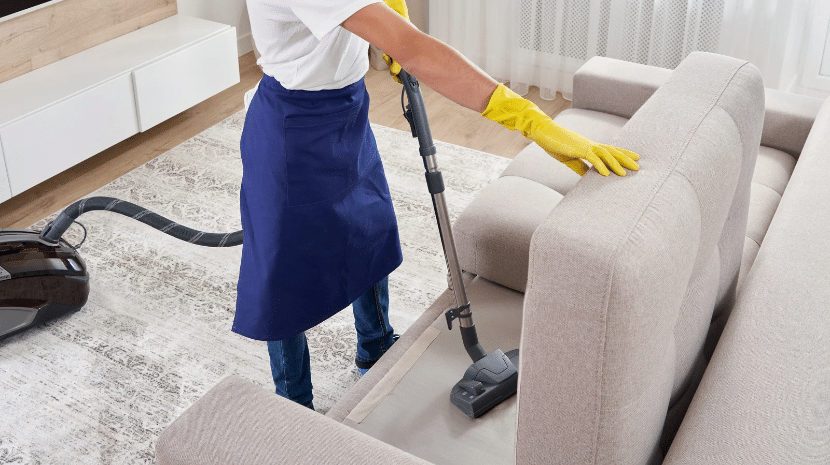
A few minutes of preparation makes cleaning more effective. Remove cushions, pillows, and throws, and vacuum the whole piece, including the seams and under the cushions, so loose dirt is not worked into the fabric. Note any stains, how long they have been there, and what caused them, since that information helps determine the right approach. Clear the space around the furniture so it can be reached easily. If the piece has removable covers, check the care tag before assuming they can be washed, because many are not meant for the machine.
When to Call a Professional
Spot-cleaning has its limits. Consider professional upholstery cleaning NYC services when you’re dealing with:
- Large, set-in, or unknown stains
- Lingering odors
- Delicate fabrics such as silk or velvet
- An X-coded fabric that can’t take liquid cleaners
- A piece you simply can’t afford to risk
Questions to Ask Before You Book a Cleaning
Before you book any upholstery cleaning NYC service, ask a few simple questions. What types of fabric do they work on, and do they check the cleaning code first? How do they handle delicate or custom materials? Will they test an inconspicuous area before treating the whole piece? What should you expect in terms of drying time? A reliable professional will answer these clearly and explain how the process works for your specific furniture. If answers are vague, or the company promises to remove every stain without seeing the piece, treat that as a reason to keep looking.
Caring for Custom Made Furniture in NYC
Custom made furniture NYC often features special fabrics, careful tailoring, and one-of-a-kind details that can’t easily be replaced. That makes cleaning decisions more important. Before cleaning a custom piece, find out what the fabric is, check for any care information from whoever made it, and be cautious with anything that could change its look or feel.
Cleaning Isn’t the Same as Repair
Cleaning refreshes fabric. It won’t fix a sagging seat, a loose joint, or a cracked frame. Match the treatment to the problem, whether you’re looking for upholstery cleaning NYC services or furniture repair NYC options. If your furniture is clean but still wobbly or sagging, it needs repair, and our guide to sofa repair explains the most common problems.
Too Big to Clean or Move?
Oversized sofas and sectionals can be hard to get out of a tight New York apartment, which makes proper cleaning or repair more complicated. Furniture disassembly can make a large piece manageable to move without damaging it. Disassembly & reassembly from $350.
Habits That Keep Upholstery Fresh Between Cleanings
Between professional visits, small habits do most of the work. Vacuum seats, arms, and the gaps between cushions weekly, using a soft brush attachment. Rotate and fluff cushions so wear is shared evenly. Keep pets off the furniture or cover favorite spots with a washable throw. Open windows or run a fan on dry days so fabric can air out, and move furniture away from direct sunlight to slow fading. Treat spills immediately instead of waiting, because fresh stains are far easier to lift than set ones.
Keep Your Furniture Fresh
Regular care keeps upholstered furniture looking better and lasting longer. Dr. Sofa has cared for furniture since 2002 – 25 years – and knows how much difference the right care makes. Contact us to talk about upholstery cleaning NYC and your furniture.
Frequently Asked Questions
How often should I schedule upholstery cleaning NYC services?
Once a year suits most households. Homes with pets, children, or allergies benefit from more frequent cleaning, while rarely used pieces can wait longer between sessions.
What does a cleaning code on upholstery mean?
The code on the care tag tells you which cleaners are safe: W for water-based, S for solvent-based, WS for either, and X for vacuuming only.
Can I clean my sofa myself?
Light spills and surface dirt, yes. Blot, test a hidden spot first, and avoid soaking. Large, set-in, or unknown stains are better left to a professional.
Is cleaning the same as furniture repair or restoration?
No. Cleaning refreshes fabric, but it cannot fix sagging seats, loose joints, or cracked frames. Those problems need repair, which is a separate job from cleaning.
How do I care for custom made furniture NYC pieces?
Identify the fabric first and check any care notes from the maker. Avoid harsh cleaners, and always consult a professional before treating delicate or one-of-a-kind pieces.
What if my sofa is too big to move for cleaning?
Oversized pieces can be very hard to move through tight buildings. Furniture disassembly can make a large sofa or sectional manageable to move without damaging it.


Follow Us


